

AI and the SME

AI is no longer something “coming soon.” It’s already part of day-to-day business for many SMEs. From drafting emails to creating marketing content, it’s quietly becoming a practical tool that helps businesses run more smoothly.

In a previous article, we explored how AI can support business growth. This time, we’re focusing on something more practical: how to actually start using it in your business today.

The key point is simple. This isn’t about becoming an AI expert. It’s about making your business easier to run and easier to grow.

The Reality for Business Owners Right Now

Most business owners are stretched.

There’s too much admin, not enough time, and constant pressure to focus on sales and growth. It’s easy to spend the day reacting instead of moving the business forward.

This is where AI can make a real difference.

In our experience working with SME owners, the biggest value doesn’t come from doing anything complex. It comes from freeing up time and improving consistency in everyday tasks.

The Big Shift: From Doing Everything to Systemising Simple Tasks

Many business owners are still doing everything themselves:

  • Writing every email from scratch
  • Creating documents from a blank page
  • Repeating the same tasks every day

This is where AI changes the game.

Instead of repeating work, you can start building simple systems:

  • Templates for emails and proposals
  • Structured processes for regular tasks
  • Repeatable workflows that save time

The goal isn’t to work less. It’s to stop repeating yourself.

From Selling Time to Creating More Value

A common challenge for SMEs is that income is directly linked to time. More hours worked often means more revenue—but it also limits growth.

AI helps break that link.

It allows you to:

  • Speed up delivery
  • Improve the quality of your output
  • Create more consistent customer experiences

The result? You can produce better work in the same amount of time, which increases the value your customers see in what you do.

Where AI Makes an Immediate Difference

You don’t need to overhaul your business to see results. In most cases, the quickest wins come from everyday activities.

Saving time on admin

AI can help draft emails, create quotes, summarise meetings and prepare follow-ups—freeing up hours each week.

Improving marketing consistency

From social media posts to email campaigns and blog content, AI helps you stay visible without constantly starting from scratch.

Supporting sales activity

You can use it to draft proposals, refine messaging and follow up leads more effectively.

Better customer communication

Faster responses and clearer messaging lead to a better overall customer experience.

Doing More Without Hiring

One of the biggest shifts AI brings is the ability to grow without immediately increasing headcount.

AI can support:

  • Marketing
  • Admin
  • Content creation

In simple terms, it’s like having extra support, without the overhead.

For many SMEs, this creates breathing space to grow before making additional hires.

Common Pitfalls to Avoid

Like any tool, AI needs to be used properly.

Some common mistakes include:

  • Relying on outputs without checking them
  • Producing content that doesn’t sound like your business
  • Using too many tools at once
  • Not being clear on what problem you’re solving

The key is to stay in control. AI should support your business, not dilute it.

Practical Steps to Get Started

Getting started doesn’t need to be complicated.

  • Identify one or two areas that waste your time
  • Use AI to support what you already do
  • Test, adjust and build confidence
  • Always review outputs and keep your voice

In our experience, the businesses that get value quickly are the ones that keep things simple.

A Real Example

Alistair McLeod was working with a business owner who felt overwhelmed and constantly short on time.

By helping his client to introduce AI into his day-to-day processes, he was able to streamline admin tasks, reduce manual work and improve the quality of his output.

The result was more time to focus on clients and less time spent on repetitive tasks.

Want to Learn More?

If you’d like to explore how AI could work in your business, our podcast goes into more detail with practical examples and real-world insights.

Progress Over Perfection

You don’t need to fully understand AI to benefit from it.

Small, practical changes can make a big difference.

When we work with business owners, the biggest wins don’t come from doing something complex. They come from making everyday tasks quicker, easier and more consistent.

That’s where AI delivers real value.

Ready to Take the Next Step?

If you’re curious about where AI could make a difference in your business, we’re here to help.

Join one of our upcoming webinars or book a 1:1 advisory session. We’ll work with you to identify simple, practical ways to start using AI, so you can save time, improve consistency and support your growth.

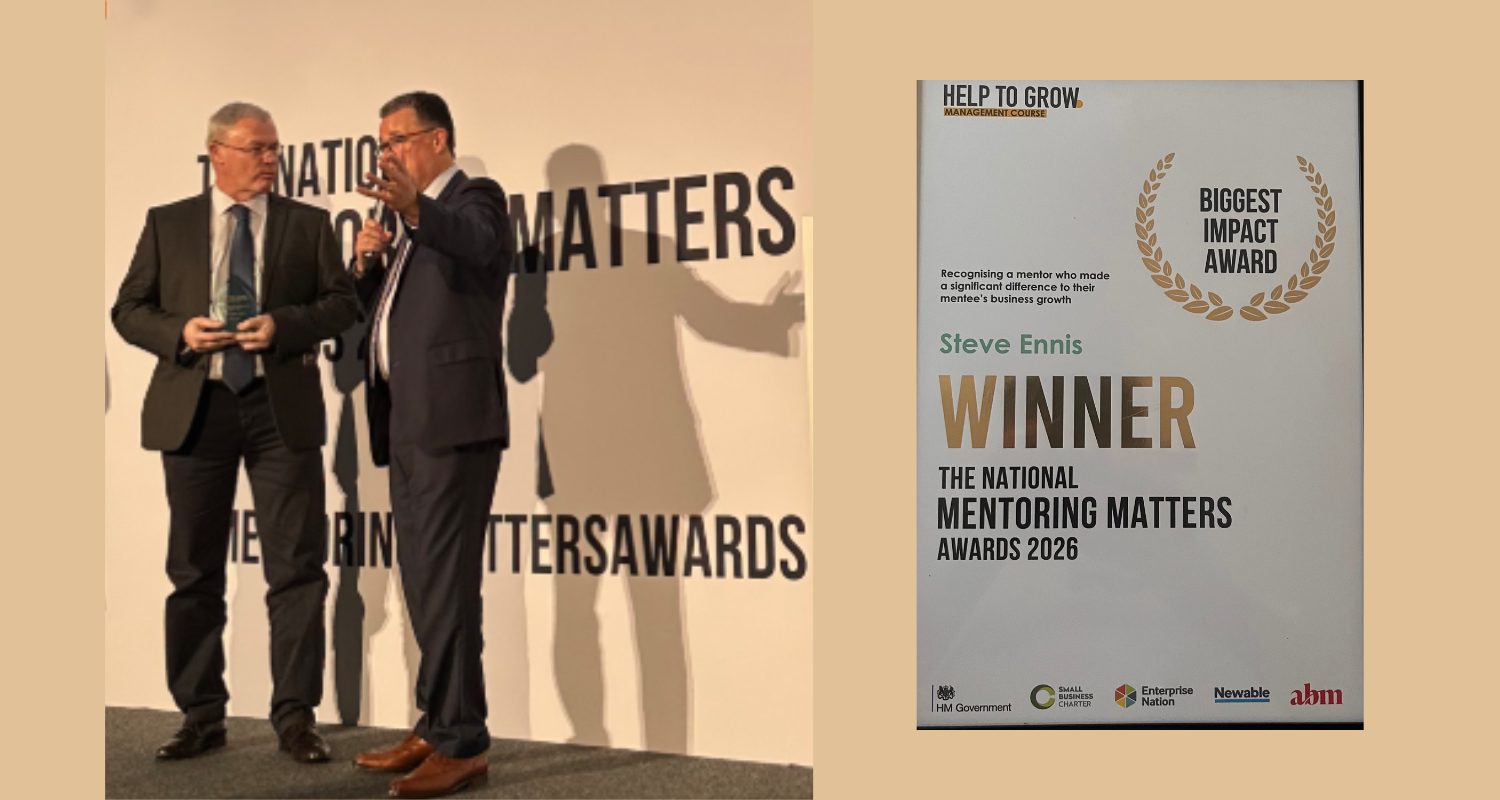
Business Doctor Steve Ennis Wins Mentoring Award

Business Doctors is delighted to announce that Steve Ennis has been named a winner at the National Mentoring Matters Awards 2026, recognising his outstanding contribution to mentoring UK business leaders.

Steve has been mentoring on the government-backed Help to Grow: Management Course for the past three years through the University of Worcester Business School, supporting small business owners to strengthen leadership, strategy and long-term growth.

Steve attended the awards ceremony in Central London alongside his mentee Richard Sadler, owner of CJC Aggregates & Landscaping Supplies, who nominated him for the award. In a remarkable outcome, both mentor and mentee were recognised as winners on the night, highlighting the strength and impact of their mentoring partnership.

The Help to Grow: Management Course has already supported more than 10,000 UK business owners, and the programme has recently received further backing, with the government confirming it will be extended for another three years.

Reflecting on the award, Steve said:

“Mentoring is one of the most rewarding things I do. Watching business owners gain confidence, develop their leadership skills and achieve real growth in their businesses is incredibly fulfilling.

Working with Richard has been a fantastic experience and I’m grateful for his nomination. The Help to Grow: Management Course is a brilliant initiative that is making a real difference to UK businesses.”

The next cohort of the Help to Grow: Management Course begins in April at the University of Worcester Business School.

Business owners interested in taking part can contact Steve Ennis or Laura Swain to learn more about joining the programme.

Book a complimentary discovery call

If you want to avoid the pitfalls of business growth, book a complimentary discovery call with one of our expert advisors.

Related Posts

How to build a values driven company

There comes a point in many growing businesses when success creates a new challenge.

You have built momentum. Customers are buying. Revenue is increasing. A team is in place. The business no longer depends entirely on you doing the work.

You have made the shift from technician to leader.

That transition changes everything.

Your focus is no longer just winning customers or delivering the service yourself. Your next stage of growth depends on building a business that can perform consistently through the people around you.

At that point, your people become your greatest competitive advantage.

Growth Changes the Leadership Challenge

In the early stages of business, speed and hustle often matter most. Decisions are quick, communication is direct, and the founder’s energy drives progress.

As the business grows, that model becomes harder to sustain.

You now need:

  • Stronger delegation
  • Clearer accountability
  • Better decision-making across the team
  • Consistent customer experience
  • Stronger retention of talented people
  • A culture that can scale with the business

This is where many SMEs hit a crossroads.

Some continue to rely purely on processes and pay. Others recognise that long-term success requires something deeper: shared values, clear purpose, and a compelling vision.

The Limits of Transactional Leadership

Many businesses are built on a straightforward exchange:

I pay you, you do the work.

In some environments, this works well enough. Temporary, seasonal, or highly task-based roles may operate effectively through clear expectations and fair pay alone.

But as roles become more skilled, more customer-facing, or more strategically important, the relationship changes.

Employees bring more than labour. They bring:

  • Experience
  • Judgement
  • Creativity
  • Problem-solving
  • Customer understanding
  • Initiative
  • Professional pride

These qualities create significant value for the business and for your customers.

When people deliver more value, they naturally expect more in return than a payslip. They want meaning, trust, development, respect, and a culture they are proud to be part of.

That is why growing businesses must move beyond transactional leadership.

What Is a Values-Driven Company?

A values-driven company uses shared principles to guide behaviour, decisions, leadership, and performance.

Values are not slogans on a wall. They are the standards that shape how people work together and how the business operates under pressure.

When values are clear and lived consistently, they help you:

  • Attract the right people
  • Retain high performers
  • Improve collaboration
  • Build trust
  • Strengthen accountability
  • Protect culture during growth
  • Create consistency for customers

In our experience working with SME leaders, businesses with strong values make better decisions faster because people understand what “good” looks like.

Three Foundations of a Values-Driven Business

1. Clear Values

The best company values are specific, practical, and shared by the people who live them every day.

They should not be written in isolation by leadership. They should be shaped with input from your team.

Ask questions such as:

  • What do we expect from each other?
  • What do customers value most about us?
  • How do we want to behave under pressure?
  • What standards matter here?
  • What kind of company are we building?

When teams help define values, they are far more likely to believe in them.

Once agreed, values should be visible in every part of the business, including:

  • Recruitment
  • Onboarding
  • Performance reviews
  • Promotions
  • Recognition
  • Everyday feedback
  • Leadership decisions

If values only appear on your website, they are not yet part of your culture.

2. Shared Purpose

People are more engaged when they understand why the business exists and the difference it makes.

Purpose goes beyond profit. It explains the problem you solve, the value you create, and why your work matters.

This becomes especially important as a business grows, because customer understanding can no longer sit only with the founder. Your whole team needs to understand the needs you serve.

When people understand the purpose behind the work, they make better decisions, show more initiative, and adapt more easily to change.

If you would like to explore this further, read our guide:What Is Business Purpose and Why Is It Important?

3. A Compelling Vision

Values define how you behave. Purpose explains why you exist. Vision describes where you are going.

A strong vision gives people direction and meaning. It acts as a North Star for decision-making.

Everyone in the business should understand it, from senior leadership to frontline teams.

There is a well-known story of a cleaner at NASA being asked what he was doing during the moon mission era. His reply was: “I’m helping put a man on the moon.”

That is the power of vision. It helps every role feel connected to something bigger.

Your vision should be ambitious enough to inspire growth, but clear enough for people to act on today.

How to Start Building a Values-Driven Company

If your business is growing and culture feels harder to manage, start with these practical steps:

Involve Your Team

Invite people into the conversation about values, purpose, and standards.

Define What Good Looks Like

Be clear about the behaviours and attitudes you want to see.

Lead by Example

Culture follows leadership behaviour more than written policies.

Build Values into Systems

Embed them into hiring, reviews, communication, and recognition.

Communicate the Vision Repeatedly

People need regular reminders of where the business is heading.

Develop Your People

Give your team the skills and confidence to grow with the business.

How Business Doctors Can Help

At Business Doctors, we help SME owners build businesses that are stronger, more scalable, and less dependent on the founder.

We work with leaders to create:

  • Clear business values
  • Stronger culture
  • Engaged teams
  • Better leadership capability
  • Sharper strategic direction
  • Sustainable growth plans

Our approach is practical, hands-on, and grounded in the realities of running a growing business.

Final Thought

If you want a business that grows beyond the founder, values matter.

Products can be copied. Prices can be matched. Processes can be replicated.

But a committed team aligned by shared values, clear purpose, and a compelling vision is far harder to imitate.

That is how lasting businesses are built.

Get in touch with your local Business Doctor for help. 

Staff Engagement: Get Everyone Moving in the Same Direction

Staff engagement - team building

A successful business strategy depends on more than a strong product or clear financial goals. It relies on having a team of people who understand where the business is going, believe in the direction, and are motivated to contribute.

That is why staff engagement matters.

For many owner-managed businesses, growth can stall not because of market conditions, but because teams become disconnected, unclear on priorities, or disengaged from the wider vision. When employees feel involved, valued, and trusted, they are far more likely to take ownership, work collaboratively, and help drive results.

At Business Doctors, we regularly see that businesses grow faster and more sustainably when people are aligned behind a shared purpose.

What Is Staff Engagement?

Staff engagement is the level of commitment, motivation, and emotional connection employees feel towards their work and the business they work for.

Engaged employees do more than complete tasks. They:

  • Understand business goals
  • Take pride in their work
  • Look for ways to improve performance
  • Support colleagues
  • Take responsibility for outcomes
  • Stay committed during periods of change

Engagement is not created through one announcement or a single initiative. It is built consistently through communication, involvement, trust, and leadership.

Why Staff Engagement Matters for SMEs

In smaller businesses, every person has a visible impact. One disengaged employee can affect morale, productivity, and customer experience. Equally, one highly engaged team member can lift standards across the whole business.

A strong staff engagement strategy can help you:

Improve Productivity

When people understand expectations and feel motivated, they work with greater focus, efficiency, and accountability.

Increase Retention

Employees who feel heard, respected, and developed are more likely to stay, reducing recruitment costs and disruption.

Encourage Innovation

People closest to the day-to-day work often have the best ideas for improvement. Engagement creates the confidence to share them.

Build Stronger Culture

A connected workforce communicates better, supports each other, and works with a shared sense of purpose.

Drive Sustainable Growth

When everyone is pulling in the same direction, growth becomes easier to manage and more achievable.

Why Many Engagement Strategies Fail

There is no one-size-fits-all solution. What works in one business may not work in another.

A common mistake is for leaders to create a strategy behind closed doors, communicate it once, and expect immediate buy-in. Without genuine involvement, employees can feel disconnected from decisions that affect them.

Real engagement comes from making strategy a two-way conversation.

This means:

  • Asking for feedback
  • Listening to concerns
  • Encouraging ideas
  • Acting on suggestions
  • Explaining decisions clearly
  • Giving people ownership of outcomes

When employees are part of the journey, commitment rises significantly.

The Power of Ownership and Accountability

In our experience working with SME leaders, one of the most effective ways to improve engagement is to give employees ownership.

When individuals at every level are trusted to contribute, make decisions, and influence results, they often respond with greater responsibility and pride.

This creates:

  • Higher standards
  • Better self-management
  • Stronger accountability
  • Greater confidence
  • Reduced underperformance
  • More proactive behaviour

Even junior team members can make a major contribution when given the opportunity and support to do so.

How Leaders Can Improve Staff Engagement

Engagement starts with leadership behaviour. Practical steps include:

Communicate Regularly

Share updates, priorities, challenges, and wins. People perform better when they understand the bigger picture.

Recognise Good Work

Acknowledging effort and achievement boosts morale and reinforces positive behaviours.

Involve Staff in Decisions

Where appropriate, invite employees to shape improvements, solve problems, and contribute ideas.

Invest in Development

Training, mentoring, and coaching show employees they are valued and have a future in the business.

Create Clear Goals

People need to know what success looks like and how their role contributes.

Build Trust

Consistency, fairness, and openness are essential for long-term engagement.

How Business Doctors Can Help

We help businesses create practical, tailored staff engagement strategies that fit their people, culture, and growth goals.

Our employee engagement workshops are designed to bring teams together, strengthen communication, and turn ideas into action.

What to Expect

Our workshops may include:

  • A professionally facilitated away day or team session
  • Tailored activities aligned to your business goals
  • Icebreakers that encourage openness and participation
  • Collaborative workshops and problem-solving discussions
  • Team-created action plans
  • Employee presentations and feedback sessions
  • Clear next steps and accountability measures

Every session is designed to be practical, engaging, and relevant to your business.

The Results of Strong Staff Engagement

Businesses that invest in engagement often experience:

  • Higher productivity
  • Better communication
  • Lower staff turnover
  • Increased motivation
  • Greater accountability
  • Stronger teamwork
  • More innovation
  • Improved profitability
  • Happier employees
  • A more unified culture

Final Thought

If you want your business strategy to succeed, your people need to be part of it.

Staff engagement is not a soft initiative. It is a commercial advantage. When employees understand the mission, feel valued, and take ownership, business performance improves.

If your team feels disconnected or you want to create a more motivated, aligned workforce, Business Doctors can help you build a strategy that works in the real world.